Showing posts with label Urban Sprawl. Show all posts

Wednesday, April 30, 2014

City Planning as a Social Movement, What it Means to be an Urbanist

Throughout the history of city planning, and except for a brief period in the 1960s, it has never directly entered the public mindset as something that can bring about social justice and lead to better living. 


Cities are the building blocks of nations. They are economic powerhouses which have developed or manufactured each and every technological advance in the history of the human race. Cities are the cornerstone of modern society. But cities are even more than that:

“Cities are for people. A place for their hopes and dreams, their work and play, their homes and homes for their children. Cities are alive and have personalities, each different from all others and each in constant change.”
-Richard Bartlett, AIA.

As I note in the banner of this blog, how we design and use our environments directly relate to the quality of interactions we have with and within them. These interactions can include everything from the mundane, such as buying groceries, to the extreme, such as criminal activity.

Cities are built by people and for people. As residents of cities, or as those who have reaped the benefits of cities, we have a responsibility not only to ensure their continued prosperity, but to ensure that the social, economic, and cultural benefits they bring reach the largest number of people and do the greatest amount of good. It is our responsibility to ensure that cities meet the needs of all social and economic groups, that cities can provide safe places for children as well as homes for the elderly. It is our responsibility to ensure that the penthouse apartments for the wealthy do not detract from the provision of housing for those on the margins of society.

Moreso, it is our responsibility to ensure that the economic and societal collapse of the 1960s and 1970s, mainly due to urban decay, does not repeat itself. We must make sure that our cities are resilient, both economically and environmentally. We must build for the desires of the present, while planning for the future; realizing that while bars and nightclubs may be desirable now, schools and grocery stores will be needed in the years to come. 


To this end, ensuring comprehensive multimodal transportation is the responsibility of every citizen, and we all have something to gain from it. Americans spend almost one third of their income on transportation, only to receive increasing commutes, increased stress levels, increased pollution, and longer work days. This is not sustainable in any way. Our love of the automobile has fractured our social networks, brought our environment to the verge of destruction, and caused our lives to revolve around the price of gasoline, not to mention the 30,000 deaths per year as a result of automobile wrecks.


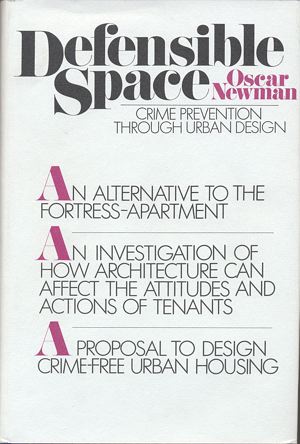
We also have a responsibility to keep our cities free of crime. This does not have to mean an increase in the police force, however. The design of our cities in and of themselves can deter crime, something which was realized as long ago as the 1960s. This, along with a fundamental rethinking of policing strategies, as brought to the table by David Kennedy, is something that it is our responsibility to advocate for. It is the job of a city to bring people together and foster social, as well as intellectual, collaboration regardless of race, class, or gender. Crime does the opposite of this. It separates communities, often across racial lines, and fosters negative stereotypes.


Finally, and on a more personal level, the design of our environment impacts our health. Perhaps the ultimate solution to our healthcare costs lies not in the halls of congress, but in our methods of development. Our fascination with automobiles and drive-throughs has led to an explosion in the popularity of fast food and a dramatic increase in distance between travel points. A recent article in USA Streetsblog notes that only in three cities in the entire country, New York, Philadelphia, and San Francisco, is it possible for a majority of residents to walk to a grocery store in five minutes or less. If we spent more time walking or riding our bicycles to the store and spent less time eating fast food in our cars, perhaps we could reduce our record rates of obesity and heart disease. If we consolidated our development and devoted more money to inner city economic development, perhaps we could alleviate the food desert issue that plagues so many low income communities.


However, none of these aspects can be looked at in their own field of influence. It is impossible to encourage more people to walk or bike in a community that is rife with crime. Likewise, it is impossible to encourage economic development and business investment without building a vibrant and resilient community. Finally, it is downright negligent to constantly mourn victims of mass shootings without paying attention to the fact that the majority of mass shootings occur in suburban areas. 


This is what the idea of urbanism is. Not just understanding the world around us and how we interact with it, but also realizing that the built environment is one that we all influence, whether we realize it or not. To borrow (and modify) a phrase from Matthew Taylor, the Chief Execuitve of the Royal Society for the Arts, I believe that the use of our urban space can “tell us about who we are as human beings, spark political debates about who we need to be, and lead to philosophical debates about who we aspire to be”. The goal of urbanists is to spark and lead these discussions, turning inclusive thought and deliberation into policy.

This sentiment was expressed over 50 years ago by Jane Jacobs, in her landmark book Death and Life of Great American Cities, which brought planning into the realm of the general public for the first time:

“Cities have the capability of providing something for everybody, only because, and only when, they are created by everybody.”


Monday, August 19, 2013

On Detroit

The bankruptcy of Detroit has sent a shock wave through the economic community and has caused much discussion about the continued provision of pensions and other "entitlements" by municipal governments. Such discussions follow the popular debate about public sector unions, but fail to take into account elementary knowledge of planning and economic efficiency. Detroit's development went against several guidelines noted primarily in Jane Jacobs' The Economy of Cities which describe how cities grow, develop, and adapt to change. Ironically, this book used Detroit as an example of how cities should develop sustainably.


1: Lack of Economic Diversity
Detroit was developed as an industrial city, and for many decades that industry and its exports were widely varied, from ship building to agricultural and industrial machinery to tools to automobiles. Jane Jacobs takes note of this and describes that a city must have diversity in its economy in order for it to adapt to change. During the second half of the 20th century, Detroit's industry began to converge on one product, automobiles. This was well and good for the brief period before automation of assembly lines and competition from foreign manufacturers. This quickly changed, as assembly lines started to automate, less manpower was required to operate factories, and legions of workers were let go. In addition, as manufacturers such as Honda and Toyota came into the American market, offering what was widely perceived to be a superior product, the demand for domestic automobiles started to decline. The fact that Detroit's main export was automobiles meant that factory workers who were laid off had few employment alternatives.


2: Sprawl
Detroit's horizontal growth (attributable in no small part to it's main export) exponentially increased the amount of money that needed to be spent to provide public services to its residents. More police and firefighters were needed to cover more land, more schools had to be built and more teachers and staff hired to operate them, more hospitals and clinics needed to be built, and more roads needed to be maintained. This not only required the city spending money to build and maintain public structures and hire people necessary to operate them, but also required private residents to pay higher taxes to maintain those services, spend more on transportation, living, and healthcare. The city is now unable to maintain this infrastructure, and vacant houses have been torn down in droves.


3: Corruption
Despite the fact that the monetary losses from the city pale in comparison to its debt, this is a major consideration. Detroit is famous for its corrupt city officials. It's mayor, Kwame Kilpatrick, has been investigated multiple times by the federal government and accused of laundering money through a variety of front companies. In addition, many current and former council members have been charged with corruption. Clearly, the city's politicians are not motivated to solve problems such as economic resiliency, poverty, and crime.


In order for a city to be sustainable, it must be economically resilient. Detroit did not plan for this (perhaps due to the fact that the interests of its politicians were elsewhere) and, predictably, failed. Cities must insure adequate economic diversity for continued survival and the well being of their residents.

Thursday, February 7, 2013

Urban Living and The Second Suburban Sprawl

A large percentage of new housing units constructed as part of downtown revitalization cater to a two specific groups of people: older "empty nesters" who live alone and do not want to drive, and young professionals, who are often single and want to be near active and "trendy" neighborhoods. A common element in both these groups is that they do not have children, and thus neighborhoods designed to attract them do not cater to the needs of children by providing amenities such as schools, libraries, and playgrounds.  


Because of this, it is likely that many young professionals will move out of cities and back to suburbs should they decide to start families. This will cause yet another round of suburban sprawl and possibly a second wave of urban decay.

In order to lessen the effects of this or prevent it altogether, urban space must be designed and purposed in a way that is inclusive to the needs of current and future residents of all age groups. In some cases, this will result in tradeoffs where a city has to decide whether to allocate resources to schools and public or affordable housing or amenities designed to attract younger residents and tourists to cities.


Despite these tradeoffs, an inclusive built environment has the potential to draw a previously unconsidered demographic to cities, families that live in the suburbs simply because these are the only areas that currently cater to their needs. Making cities attractive for these groups will not only work to reduce suburban sprawl but will also extend the economic and social benefits of urban life to as many people as possible.

Tuesday, July 24, 2012

Suburbanization and Public Health

This article is a summary of research by Dr. Howard Frumkin and published in Public Health Reports. Dr. Frumkin writes on connections between various aspects of suburban development and pollution, mental health, physical fitness, and preventable deaths due to automobile accidents.

The relationship between automobiles and air pollution is discussed first, and this research notes that there is a significant correlation between vehicle miles traveled and proportions of hydrocarbons, oxides, and nitrogen, as well as other greenhouse gasses, in urban atmosphere. It is also noted that due to weather conditions, air pollution does not remain in the immediate vicinity of roads, but can travel downwind of where it is released. The study notes that increased pollution can pose an increased risk to those with asthma, as well as the elderly and newborn.


This study also points out the connection between density and vehicle miles traveled, noting that the less dense a location is, the more driving that will take place and the more pollution that will be created.

The second topic discussed is that of deaths due to automobile crashes and poor accommodations of pedestrians. While it is noted that improvements in vehicle and infrastructure safety have decreased traffic fatalities in recent years, the study points out that typical suburban layouts are highly conducive to automobile traffic while being dangerous to pedestrians. This is due to lack of connected secondary roads and main arteries which can often be three or more lanes in each direction. Proper pedestrian amenities such as sidewalks and crossing lights are not likely to be present, although this is changing.


Again, a correlation is established between low density and traffic deaths, both in cases involving two or more automobiles and in cases involving automobiles and pedestrians.

The next topics discussed are those of land use, travel patterns, and physical activity. The study notes that dense land use is highly correlated with both walking and bicycling, while lower density is correlated with higher automobile use. Similarly, lower automobile use is correlated with higher physical activity, as denser environments increase connectivity and make methods of traveling such as walking and bicycling much more viable.


Access to water is also mentioned in the study, noting that less dense development will contribute highly to water pollution, as paved surfaces such as parking lots will prohibit water from entering the ground and the water table, and will instead force it to pick up pollutants as it runs to storm drains. In addition, this reduction in aquifer capacity will reduce available water for these areas.


The urban heat island is touched upon as well, noting that pavement and dark roofs absorb heat and locally increase temperatures. It is noted that this can lead to increases in cases of heat stroke, heat exhaustion, and other heat related conditions. These can have especially severe effects on the young, elderly, and disabled, who are not as mobile, as well as the impoverished, who may not have access to air conditioning.


Mental health is one of the most drastic aspects of suburbanization that the study goes on to discuss. It notes that increased commuting can lead to elevated stress levels and physical ailments. This can be manifested by “road rage”, in which motorists are inclined to commit violent or threatening acts against other motorists. This can lead to a generally more violent society, as not only does violence becomes an accepted way to deal with stress, but also commuting long distances by car can lead to social isolation.


Degradation of social capital is the last aspect of suburbanization discussed in this study, social capital is the idea that social networks can be used to achieve certain tangible goals, such as employment. The study notes that a correlation has been noticed between suburbanization and decreased social capital, manifested in lack of trust and increased family anguish. It mentions the primary cause of this to be the income segregation of suburban development, but also notes that time spent commuting is time spent away from friends and family and less time to give back to the community, either through PTA meetings, community service, or neighborhood events. Neighborhood design is a large factor in social isolation, as single use development set back from streets and with minimal sidewalk space deters the usage of outdoor space.


Sunday, April 29, 2012

The Federal Government and Infrastructure Financing


One thing that was clear after the 2010 congressional elections, and which has become clearer with the budget fights, is that guaranteed sources of federal funding for mass transit projects are not sacrosanct. The recent transportation bill proposed by the house eliminated dedicated funding for bicycle paths and pedestrian improvements and put dedicated funding for rail transit at risk, instead lumping it with highway funding and forcing states to divide it between large numbers of projects.

In 1964, Congress passed the Urban Mass Transportation Act, which established the Federal Transportation Administration as a component of the US Department of Transportation. When the act was passed, it was understood that in order for the economy of the United States to function as efficiently as possible the economies of its cities also needed to function as efficiently as possible. In order to do this, it was deemed necessary to provide alternatives to automobile transportation, and thus repair and upgrade existing mass transit systems across the country and provide for the construction of new ones. Atlanta's MARTA and the San Francisco Bay Area's BART were some of the direct results of this program, as were the expansion of the Chicago L, rehabilitation of the New York City Subway, and expansion of the T in Boston.


Additional federal legislation was passed creating the National Capital Transportation Agency which oversaw the creation of WMATA and the construction of the Washington DC Metrorail system. This was extended to a 106 mile system serving the District of Columbia and its suburbs.


More recently, programs such as SAFETEA-LU and small starts have provided funding to upstart streetcar systems and pedestrian improvements, allowing the creation of a unified streetscape that supports transportation alternatives and is friendly to mixed use development and density.

Even during the presidency of Ronald Regan, mass transit funding was seen as relatively sacrosanct among those in congress, and set amounts of funding were awarded to both highway and transit without much complaint.
Now, however, many Republicans in Congress want to eliminate many of these programs, instead handing states blocks of money that they must divide up between many projects in many localities, rather than allowing cities themselves to apply for funding for specific projects. This is due to the fact that many Republicans see transit investment as a waste of money that should be going towards highway spending. This is in fact the opposite case, as highways are much less cost effective than rail transit.

The political environment caused by this has caused many cities to be forced to fend for themselves in terms of mass transit funding, as evidenced by Rahm Emannuel's planfor Chicago. This inevitably raises the question of “where will this money come from?”. While cities such as New York and Chicago may be able to support these investments due to their extremely large populations, smaller cities which may be equally in need of transportation funding cannot. State governments are another option, but they may not warm to the idea of giving large portions of their money to a relatively small geographic area, as evidenced by the Cincinnati streetcar project and the future of high speed rail in Ohio.
Private investment is one other option, and one which is becoming more attractive for smaller projects such as streetcar systems, which developers are happy to help fund as they know they will recoup this money in the form of increased property values and land desirability.


Nevertheless, the importance of the Federal Government in infrastructure funding is one that cannot be ignored, simply because on the lowest level it represents the recognition of a problem, and one that not all cities can solve on their own means. Ideological battles over public transportation for the purposes of scoring political points are not sustainable, nor are they good practice. Cities are the economic engines of nations, and thus should be given proper resources.

Wednesday, January 11, 2012

"The City," A 1939 Film on the Supposed Suburban Future

Part 1:

Part 2:


The intent of this film was to promote the idea of the Garden City, an idea that was gaining traction at the time due to the popularity of the automobile. In this film, a social justice appeal is made claiming that traditional methods of city building are no longer adequate to foster social interaction among residents, that density causes isolation, and that pollution generated from nearby factories aids in the creation of slums. The solution that is presented to this problem is that of separating the living from the working. In other words, the creation of suburbs.

It is interesting to note that the suburbs depicted in this film differ in many respects from the actual results of the Garden City movement. In the film, houses are in close proximity to stores and offices, but factories are separated, it is noted that one can walk to work, school, and various stores. The film claims that this will bring people closer to nature, something which the film (commentary written by Lewis Mumford) considers a major concern.

The film lists the benefits of these as such: It claims that cities built in this manner will remain human scaled and not grow ungainly (read: will not be dense), it claims that they will balance people, technology, and nature, and it claims that they allow for efficiency by consolidating living and working into separate domains.

However, when these ideas were translated into policy, the exact opposite happened. Suburbs became disconnected and focused on the automobile alone, they sprawled out of proportion and sacrificed natural resources and land, and made living less efficient because more money must be spent on roads, utilities, and transportation expenses.

The arguments that this film makes for suburbs seem more appropriate if they are instead used to promote density, mixed uses, and transit options. These are efficient, conserve land, and allow for social interaction.

Further more, in Death and Life of Great American Cities, published slightly over twenty years after this film, Jane Jacobs argues that density and mix of uses are, in fact, beneficial as they promote both social and economic diversity, which allows cities to develop and function efficiently. This has been proven as suburbs have expanded and required large amounts of land and money to do so.

The lacuna between the ideas expressed in this film and their implementation is a lesson for the current generation of urban planners. Care must be taken to insure that cities are rebuilt with proper regard to how they are used by their residents and the social and psychological effects of the urban landscape. In addition, planners must insure that their ideas are not tainted in the name of political gain or expedience during implementation.

Wednesday, November 23, 2011

VDOT Sees Sprawl as Good Politics

A month ago, the Virginia Department of Transportation (VDOT) reversed its neighborhood connectivity standards. In doing so, it threw out progressive, anti-sprawl regulations made in 2009.


In Virginia, when a developer builds a development, they construct the roads and then VDOT acquires them from the developer and covers their maintenance costs. In 2009, VDOT edited their regulations as to what they require from developers to include connectivity. With this, the number of roads in a development would be divided by the number of intersections, yielding the “connectivity index” of the development. These regulations stipulated that cul-de-sacs and other road termini count as intersections, but roads that terminate at the property line of the development without connecting to adjacent roads in another development do not, thus discouraging isolated developments connected only by a main road.


However, the regulations made permissions for “incompatible uses” or developments separated by natural boundaries (such as railroad tracks or streams) to be exempt from these connectivity standards, but went on to say that residential and commercial uses are always compatible and should be connected when possible.

Ironically, these original regulations were made with the understanding that they would save the state money in the long term, as less funding would be required to plow roads, install utilities, and provide police protection, fire protection, and educational facilities. In addition to this, it would also make main roads safer by diverting traffic off of them, save time by offering direct routes to destinations, and promote walking and bicycling, as secondary routes with lower speeds and less traffic were available.

However, in what seems to be nothing more than a political statement, VDOT and the Republican governor Bob McDonnell decided to throw these regulations out the window. Allowing for single use, cul-de-sac centered sprawl to grow without bound, and causing increased traffic congestion, increased rates of automobile accidents, increased pollution, and unnecessary spending on utilities and services.


Why, then, did VDOT and Governor McDonnell allow this to happen?


The answer is simple, ideology and politics got in the way of facts and numbers. Govenor McDonnell and VDOT decided to conveniently ignore the cost savings these standards could bring about. Instead, they derided the standards as “Socialist” and promised to stamp them out, as the Tea Party usually does with regulations that promote public transit, mixed use development, and alternatives to driving.

In reversing these development guidelines, the State of Virginia has shown that it is willing to ignore facts, sacrifice economic development, public safety, the environment, and the well being of its citizens in order to score political points. This is something that should not be allowed to happen.

Tuesday, August 16, 2011

On Streetcars

Given the current political turbulence over streetcar projects in Northern Virginia, Washington, DC, and Cincinnati, Ohio, I think it's time for a discussion surrounding the nature of these projects, what they are intended to do, what the rational for supporting them is, and how accurate the arguments against them are. This article will also look at several features of each individual project.


Streetcar systems are one of the best ways of promoting urban investment, they allow quick and convenient access around a city and to city districts, allowing people to access more area than they would be able to access by foot or car. This shows that a community is willing to make long term investments and intends to promote downtown growth over suburban growth into the future. Developers see this as a green light to build and renovate. Constructing mixed use development in conjunction with affordable and mixed income housing. Streetcar construction also promotes an improved street scape, including rebuilt sidewalks, roads, and vegetation.  


However, this investment does result in a redirection of resources from the suburbs to the city, but these resources are put to good use, and do not require the quality of public services provided to suburban residents to decrease. Dense urban living is more efficient than suburban living, and requires less resources to maintain. In addition to this, the investment in urban areas will serve as an impetus for people to move to them, decreasing suburban sprawl.

Streetcar systems are superior to buses for several reasons, such as lack of pollution, a smoother ride, a lack of social stigmas, visible routes, longer vehicle lifespans, and inclusion on local non-transit maps.


This being said, let's examine a few systems


Washington, DC: The Washington system is unique in that it is a city wide network being planned and built in phases, with the first segment currently scheduled to open in 2013 along H Street. However, the construction and planning has been besieged with mismanagement from the beginning. The concept originated as a light rail line in Anacostia, which was then became a streetcar route. The H Street line and the Anacostia line were under construction simutaneously until 2009, when the DC Department of Transportation ordered construction hated on the Anacostia line and incorporated it into another phase of the project.

The goal of the Washington, DC project is to connect the districts and neighborhoods within the city, as opposed to the Metro, which was designed to get commuters into and out of the city. It will also serve as an impetus to rebuild many decayed parts of the city, as some segments of the streetcar project (such as the H Street line) are part of complete rebuilds of the streets and street spaces, which also includes new development and affordable housing.

The initial H Street line will then be extended up K Street and out Benning Road, forming the first in a series of lines crossing the district.

The majority of the lines will terminate at Metrorail stations, allowing residents of DC neighborhoods access to the greater metro area without necessitating a car. It will also run on battery power in the core downtown, to comply with a 19th century law prohibiting overhead electrical wires downtown.


Northern Virginia/Columbia Pike Streetcar: This is an initiative sponsored by the Columbia Pike Transit Initiative with the intent of turning Columbia Pike into a “main street” with urban areas surrounding it. The line is intended to run from Northern Virginia Community College to just past the Pentagon Metrorail Station, however there are no current plans for it to bridge the Potomac River and connect with the Washington DC system. Such a connection would be advantageous because it would eliminate the need for a transfer to Metrorail in order to access Washington DC. However, the future of this project is uncertain, as the Virginia General Assembly ruled that the agency set up to develop it cannot collect the money necessary to build it.

When constructed, this line will serve as a development anchor for the area, promoting dense development and urban growth patterns to counteract sprawl.


Cincinnati, Ohio: The proposed system in Cincinnati, Ohio is modeled after the successful system in Portland, Oregon. This system is planned to connect downtown, Over-the-Rhine, and various neighborhoods in proximity to the University of Cincinnati. A feasibility study conducted on the proposed route in 2007 found that the city of Cincinnati would receive close to two billion dollars in benefits from the streetcar, including $34 million in tax revenue, $17 million in business activity, between $54 million and $193 million in redevelopment activity, and gain anywhere from 1,200 to 3,400 residencies.

Several extensions are also proposed to the initial line, including Clifton, the Cincinnati Zoo, and Union Terminal. The line is currently expected to cost $102 million, with full extensions to Clifton, the zoo and the university coming in at $185 million.

In 2009, a measure was put on the ballot by the right wing group the Coalition Opposed to Additional Spending and Taxes (COAST) to kill the project, this measure targeted not only the streetcar but also proposed high speed rail from Cincinnati to Columbus to Cleveland as well as a tourist train at the Cincinnati Zoo. The measure failed 56% to 44%.

However, another measure by the same group is in the works and was recently approved to be added to the November ballot. This measure would prohibit any money regardless of funding from being spent on any rail project in the Cincinnati area for the next decade.

It is imperative that this measure be defeated soundly. Failing to do so will do nothing less than grant an economic death sentence to the city of Cincinnati and its metro area. COAST apparently wants to apply its acronym to the economy of Cincinnati, in which case it it will not grow, and coast until it stops completely.

Wednesday, August 3, 2011

6 Ways Urban Development Impacts You (and why Suburban Development is Bad)

1) Money: The amount of money you spend on transportation expenses relative to income increases with the number of cars you own. This is due to acquisition costs, fuel, and maintenance. This means that the farther away from your job you live (i.e. the more you spend on fuel and the more necessary multiple cars become) the less money you have to spend on other needs or to save. Mixed use zoning, transit oriented development, and high quality public transportation can reduce these costs. In addition to this, suburban housing is subsidized to an extent by the Federal Housing Administration and the loans it provides and guarantees towards single family homes, thus the true costs of suburban housing are hidden from the homeowners. These loans cannot be used to purchase residencies in multi-unit buildings and similar incentives are not available to renters.


2) Health: The lifestyles encouraged by different development types vary wildly. Suburban development is based on the car, which means minimal walking and lots of fast food restaurants. Urban development is pedestrian friendly, encouraging walking and transit use. However, the increased consumption of fast food and decrease of physical activity due to primarily suburban development patterns have put strain on our medical system. In addition to this, the long commutes created by automobile centric development have an adverse impact on mental health, as they cause levels of stress to increase, which in turn can cause violent behavior and loss of workplace productivity.


3) Reenforcing or Breaking Stereotypes: Due to the factors that were in play before and during the beginning of suburban growth, poverty has become unfairly synonymous with race. Ethnic minorities are almost always depicted as being impoverished, while Caucasians are almost always depicted as being wealthy. This has then created another unfair relationship between ethnic minorities and predisposal to criminal behavior, causing public housing projects and mixed income projects to be opposed along racial lines, thinking that they will bring crime. These same projects, if successful, will bring their occupants out of poverty regardless of race, and can be used to break these unfair depictions of ethnic minorities.


4) Quality of One's Living Environment: In addition to the health and economic effects of automobiles, large quantities of cars can also create low quality living environments. Large roads and freeways create noise and light pollution, and parking lots use land that could be developed or used for parks. In addition to this, pollution from cars creates smog and poor air quality, leading to additional health issues.

5) Decrease in Quality of Public Services: As the density of development decreases and the amount of land consumed by it increases, applicable services such as police and fire departments, schools, and utilities become more expensive and less efficient because they have to cover more ground. Since the fiscal needs of these organizations are not adequately met, their quality becomes unevenly distributed and overall quality decreases.

6) Crime: Sound urban development and urban revitalization includes use of tools such as mixed income housing, mixed use development, and transit oriented development. These serve to bring investment and people to the areas they are built in. The high presence of people and mix of uses serves as a deterrent for crime because they provide public surveillance of the street space and property.

Monday, June 27, 2011

New Urbanism, Why It's Necessary

In my last post, I made note of the issues surrounding New Urbanist design, and described how suburbs cannot truly be considered “New Urbanism”. This is the second post in the series focusing on the New Urbanist movement, in which I will be discussing presentation of the issue.

Since it's formalization in the 1980s, New Urbanism has been promoted mainly in conjunction with environmentalism, and has been talked about in terms of lowering greenhouse gas emissions and reducing vehicle miles traveled (VMT).

This is all well and good, but the association of New Urbanism with environmentalism has created tension among political groups, with New Urbanism being seen as primarily a monolithic (liberal) effort, even though it has benefits far beyond what one political ideology is willing to promote.

Let's start with examining the economic aspects and realities:

1) Cities are the primary economic engines of a region and are responsible for most economic growth. This is because cities serve as markets and exchanges to goods produced elsewhere, this, as well as logistical ease, make cities natural locations for large and small businesses.


2) Density costs less. Suburbs require extra investment in utilities, roads, and land due to the fact that there are a low number of houses built per acre of land that is used. This in turn leads to an extra investment in schools, police stations, fire trucks, school buses, police cars, ambulances, hospitals and clinics which must be built and acquired to serve a decentralized community.


3) Private banks and the Federal Government are primarily responsible for urban sprawl. During the 1930s the Federal Housing Administration was created to promote home ownership by financing and insuring mortgages at low rates. Private banks aided this by blacklisting many urban areas (such as the South Bronx in New York City) so they could not receive loans to improve property. These actions created a housing bubble which resulted in an oversupply of suburban houses as well as a large amount of sub-prime mortgages granted to people at high risk for default. Those two factors combined to create the economic nuclear that which recently happened.


4) The dominance of the housing and automobile industries have essentially put the United States' economic eggs in one basket. The size of these industries coupled with their large workforces led them to be considered by many as “too big to fail”, meaning that facing reality was all that more difficult. In order to build a rigorous and fail-safe economic engine, a variety of equally viable industries and workforces must be created to insure that if one collapses, the entire economic system does not shut down.


And now some social perspectives:

1) Automobile commuting causes stress and is detrimental to mental health. The majority of commuting in the United States is done by car, be it from suburb to suburb or from suburb to inner-city. Excessive stress can degrade physical health, impact decision making, reduce workplace productivity, increase suicidal thoughts (this is starting to sound like a drug commercial), cause insomnia, and cause depression. Suffice to say, stress is bad and should be minimized.


2) The phrases “ethnic minority” and “low economic status” are nearly synonymous with one another. Even before the creation of automobile dependent suburbs, ethnic minorities and religious groups were barred from many new housing developments and the United States was divided along religious and ethnic lines. This trend continued, abet on a reduced scale after World War Two. African Americans in particular were still prohibited from moving into middle class suburban areas, even though some had the financial means to do it (a good example of this is illustrated in A Raisin in the Sun). Urban areas decayed as the white middle class tax base left, leaving ethnic minorities to fend for themselves and go on to suffer the ravages of urban renewal.


3) Ethnic minorities continue to be marginalized through no fault of their own. Because of the removal of the tax base and a re-location of services to the suburbs, most inner-cities now feature deprived schools, inadequate police protection, mediocre housing, and a lack of job opportunities.


4) New Urbanism (when used properly) can dramatically lower crime. Targeted economic development can fix the job, housing, and service crises that plague inner-cities, and can thus cut down dramatically on the opportunities for crime, as it can provide jobs, education, and a sense of community where there was none before.


5) We don't really have a choice. Unless we want to have another housing crisis in the next twenty years, we need to dramatically change the way we design our environments and how we structure our lives, not to mention preventing urban crime and gangs and protecting out economic assets.

These are the kind of arguments that need to be made and debates that need to be had in order to fix the problem of urban sprawl. If we want to build a society that is economically, socially, and yes, environmentally sustainable, we need to look at the big picture and tackle it from all sides.