Showing posts with label NIMBYism. Show all posts

Thursday, February 9, 2012

House Republicans Prefer Freeways over Safe Access to Schools

A recent article by the Huffington Post noted that two committees within the House of Representatives voted to remove federal funding for the Safe Routesto School National Partnership, an organization which promotes pedestrian and bicycle friendly environments around schools. The $202 million provided to the organization is approximately five percent of the interstate highway system's annual funding. This money will still be distributed to states, but in the form of general highway funding, which would be spent on interstate improvements and road construction as well as transit. John Mica (R-FL), who has a record of opposing alternative transit investments and was also the author of a bill to privatize Amtrak, claimed that this reduction in funding would not pose a problem, as he claimed that communities would make up the missing funds with their own investments. This seems highly unlikely however, as many communities are cutting back on program funding due to the economic climate.  


Dedicating additional funding towards freeways is wasteful and inefficient, as it causes increases in traffic congestion because of induced demand, increases in utility costs because of expansion of power and water lines to low density development and increases in personal transportation expenses.


Not only does this measure show the Republicans' support for inefficient and wasteful transportation projects, but it also shows they are willing to forsake communities and schools to get there way on these issues. Depriving schools of adequate pedestrian and bicycle access not only puts children at risk of being injured in a vehicular accident, but also promotes an unhealthy lifestyle as it discourages walking and bicycling, leading to a decrease in physical activity.


Furthermore, this proves once again that Republicans and the Tea Party are guided by blind ideology alone and care only about the illusion of policy implementation, rather than the substance of it. If reducing government spending was indeed a high priority for the right wing, then they would be adamant supporters of mixed use development, public transportation use, and bike paths and sidewalks such as those supported by the Safe Routes to School National Partnership. All of these things are proven to not only reduce government and private expenses but also to generate economic development, which is something that today, simply cannot be ignored.

Wednesday, July 13, 2011

On United Nations Agenda 21

Anyone who is somewhat familiar with current issues in planning has mostlikely heard of UN Agenda 21, something most often brought to discussion by NIMBYists and the right wing skeptic who fear a takeover of the United States by the UN or a world government conspiracy.
But what actually is it? Is it a set of binding guidelines that member nations are required to follow, or is it simply the recognition of a problem?


The Agenda is composed of 27 principles which highlight various economic and environmental goals which communities should strive for in order to be considered “sustainable”. Special attention is paid to developing countries and to womens' rights. The Agenda is silent on enforcement of these issues, and states that it is the right of nations to exploit their natural resources at will.  


Thus, it is simply the recognition of the problem of development on the environment, much the same way that warning labels on packs of cigarettes and bottles of alcohol are recognitions of the health problems they cause.

However, the Agenda promotes a skewed view of the issue of urban development. The word “environment” is mentioned forty times throughout the course of the article, whereas the word “economic” is only mentioned four times. Thus, the Agenda promotes the idea of New Urbanism from the typical environmentalist perspective, rather than taking a broader, all inclusive view and including economic and social arguments.

This perspective serves to isolate people of other political views who would otherwise support many issues raised for New Urbanism, as stated in an earlier post.  

Sunday, June 19, 2011

Ken Cuccinelli and the Dulles Metrorail Saga

The idea seems simple enough: connect the ninth busiest airport in the country with the nation's capital. The execution, well, makin' progress... 


After a decade of planning and with phase one of the project finally nearing completion, a new dispute has involved, this time involving the infamous Virginia Attorney General Ken Cuccinelli.  

Cuccinelli, apparently dissatisfied with the mere existence of the line, is now attempting to influence Loudon County voters to reject the second phase of the project (the one which would include the Dulles Airport station) by electing officials who would refuse to contribute funding towards it.  

Not only is Cuccinelli in the dark on this issue and willfully ignoring the economic development that the line would bring, but his actions regarding this project do not fall within his job description as Attorney General.  

And, like the Tysons' tunnel dispute, this is all over a relatively simple matter: Should the Dulles station be above ground, or underground?

The Washington Metropolitan Airports Authority (which is overseeing the project, not the Washington Metropolitan Area Transportation Authority, interestingly enough), wants to build an underground station, claiming that it will streamline connections from Metrorail to the terminal and decrease overall travel time.

Stakeholders including Virginia Governor Bob McDonnell want an above ground station, claiming that it will cut $330 million from the cost of the project, but increase travel time by three minutes.


The solution for this is simple: design the above ground and underground stations for the same plot of land. Build the above ground station directly on top of the main terminal parking lot (where the underground station is currently poised to go). This would solve any dispute and create the best of both worlds for travelers and taxpayers.

The link to the editorial which inspired this post.   

Monday, June 13, 2011

The United Kingdom's Planning Bill, Saving Money or Marginalizing the Public?

On June 24th, the BBC reported that the Parliament of the United Kingdom has introduced a planning bill, claiming that it will help streamline megaprojects in wake of the Heathrow airport expansion. However, some claim that this will alienate the public and not allow them to contribute to the design process.


According to the article, UK planners don't think this is a problem, because “People find planning very dull - until it affects them”.

That's the problem: Planning tends to affect people in ways that may not be apparent on the surface and may take years to develop. These kind of effects may not be noticeable in the design of a project, but can quickly come to light as a project is built and utilized.

While the purpose of this bill is supposedly to save money, there is a side-effect:

While this bill is currently limited to transportation projects, it could easily be expanded to encompass other things (such as housing projects), and half a century of planning activism would be gone, as a master planning committee could simply design unbounded without insight into public concerns and create developments that are ill-suited to public needs or usage.

While marginalizing public involvement may be seen by some as an appropriate (and some may say fair) way to deal with NIMBYism, it will mostlikely be a realization of many a NIMBYist's fears, making future planning efforts doubly difficult.


A better way to tackle NIMBYism would be to explain thoroughly to the public the rational behind a project or development and, when necessary, explain that there are no workable alternatives. Marginalizing public involvement does not lead to an optimal solution because it only takes into account the viewpoints and ideas of the few who initially designed the project and does not keep planners in touch with reality.

A link to the BBC article is here:

Saturday, June 11, 2011

50 Years of Jane Jacobs: What Have we Learned and What Needs to be Done?

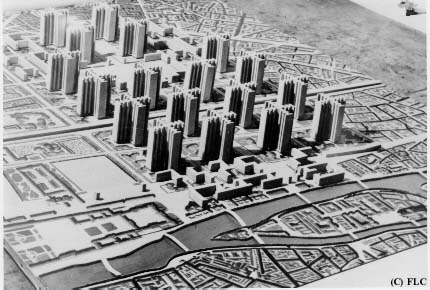
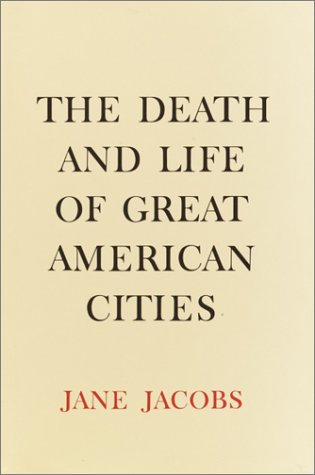
2011 marks the 50th anniversary of Death and Life of Great American Cities by Jane Jacobs. In it, Jacobs attacks the planning methodology of the 1950s and 60s, most notably the Radiant Garden City idea which gained traction about this time. The book is known as the main impetus behind the New Urbanist movement, which questioned many modernist planning techniques.


So what exactly is it that we have learned, and in some cases, failed to learn, from this book? How is the New Urbanist movement set up to cope with some of the issues caused by the recent housing crash?

1) Modernist planning has been discredited: This happened in the early 1970s with the decay of many modernist low income housing projects, notably Pruitt-Igoe and Cabrini-Green. The sheer scale of these developments isolated many people who were previously members of close families and communities. The projects were not able to foster any social development, and no sense of community or ownership developed among the residents.


2) New Urbanism is now mainly an architectural movement: Despite the successes of the New Urbanist movement, the term “New Urbanism” is being widely misused to promote things which are in fact, the exact opposite of what it is about. A residential suburb that is composed of rowhouse style buildings built wall-to-wall is considered “New Urbanist” by many developers and most residents, but it is in fact, not. In order for New Urbanism to work, it must be clearly understood and used appropriately.


3) The public has been given a roll in the planning process: During the mid 20th century, planners were accepted as experts in their field and were not questioned by the public. The New Urbanist movement changed this and public planning meetings are commonplace. However, this has backfired somewhat, as opposition to planning projects is increasing because members of the public do not always understand the goals of a project and the reasons for its proposal.

4) Modernism is not dead yet: While the epoch of Modern architecture may have come to a close, many of the ideas that allowed it to flourish are still in place, automobile dependance, single-use zoning, and the prevalence of suburbs composed of detached, single family houses and shopping malls. These do not provide social benefits, waste resources, and do not create sustained economic development.

5) Urban development (mostly) focuses on the whole of a city, not on specific parts: This is another of Jacobs' main arguments. One reason for the failure of project housing is the fact that it is thought of as project housing, thus creating social perceptions about it and those who live in it.

6) Mass transit is being recognized as a core component of urban development: In the mid 1990s, San Francisco revitalized its waterfront district by tearing down the damaged Embarcadero Freeway and replacing it with a boulevard, pedestrian mall, and light rail/streetcar line that connects Market Street with AT&T park and Fishermans' Wharf. In 2001, Portland, Oregon opened the Portland Streetcar, which has generated over $1 billion in economic development and revitalized areas such as the Pearl District.


7) Subsidy can only work so well: Since the 1930s, mortgages on suburban houses have been subsidized by the Federal Housing Administration. These subsidies artificially inflated the housing market and promoted home ownership to people even when it was not economically optimal for them. This is what created the subprime mortgage market, and thus the recent crash.