Friday, July 22, 2011

Is Gentrification Good?

One aspect of New Urbanism that is often discussed is gentrification and the role it supposedly plays in making neglected areas of cities attractive again. However, its danger comes with the fact that it has potential to uproot current residents of the area being gentrified, and to replace current services with ones that will seem to be beneficial to the new residents.

These issues manifest themselves in the way that wealth (and the lack thereof) are personified in American society. Middle and high income residents are likely to be white, and low income residents are likely to be ethnic minorities.


And herein lies the problem. The economic issue of gentrification (middle and high income people moving into an area of investment and displacing the lower income groups who used to live there) is suddenly turned into a racial issue, where white residents are seen as kicking black residents out of their houses and forcing them to move elsewhere, either into other neglected areas or into public housing.


Because of this, gentrification areas and building public or affordable housing can sometimes be opposed along racial lines.  

The solution to this conundrum lies in breaking the perceived link between ethnic minorities and poverty, and thus ethnic minorities and criminal activity.


This can be accomplished through rebuilding an area while maintaining its architectural style and building public housing units interspersed with market rate housing units, allowing public housing units to be distributed to tenants in the form of vouchers. The value of the vouchers would decrease as the residents' income increased until the residents could own the property outright.  

Yet another way to determine whether a unit would be market rate or public housing would be to make every other unit that comes up for sale in a neighborhood public or market rate.

Either way, there should be no architectural differences between the public and market rate units. Doing such would create the opinion that occupants of public housing are by some means inferior to occupants of market rate housing.

Good public housing should not keep the poor in poverty.

Taking the approach of sandwiching public housing between units of market rate or affordable housing would both confer the social benefits of mixed income housing to the lower income residents and eliminate the stereotype of racial groups being predisposed to poverty or crime.

A good way to picture this would be to imagine side streets with rowhouses along them, every other rowhouse on one side of a street would be public housing, and the same for the other side of the street. Main avenues would be bordered by mixed use development with some commercial office space thrown in.

If you take away one thing from this article, it should be the following:

Ethnic minorities do not cause crime, poverty causes crime.

Wednesday, July 13, 2011

On United Nations Agenda 21

Anyone who is somewhat familiar with current issues in planning has mostlikely heard of UN Agenda 21, something most often brought to discussion by NIMBYists and the right wing skeptic who fear a takeover of the United States by the UN or a world government conspiracy.
But what actually is it? Is it a set of binding guidelines that member nations are required to follow, or is it simply the recognition of a problem?


The Agenda is composed of 27 principles which highlight various economic and environmental goals which communities should strive for in order to be considered “sustainable”. Special attention is paid to developing countries and to womens' rights. The Agenda is silent on enforcement of these issues, and states that it is the right of nations to exploit their natural resources at will.  


Thus, it is simply the recognition of the problem of development on the environment, much the same way that warning labels on packs of cigarettes and bottles of alcohol are recognitions of the health problems they cause.

However, the Agenda promotes a skewed view of the issue of urban development. The word “environment” is mentioned forty times throughout the course of the article, whereas the word “economic” is only mentioned four times. Thus, the Agenda promotes the idea of New Urbanism from the typical environmentalist perspective, rather than taking a broader, all inclusive view and including economic and social arguments.

This perspective serves to isolate people of other political views who would otherwise support many issues raised for New Urbanism, as stated in an earlier post.  

Saturday, July 9, 2011

The Pruitt-Igoe Myth: A Movie

I came across this video some time ago, it is the trailer for a movie called The Pruitt Igoe Myth detailing the legacy and misconceptions of it's titular infamous housing project. I have not gotten a chance to view this movie yet, but this era is one of the most pivotal and most interesting in the history of urban development.


The things depicted in this trailer and covered in this movie are the reason we do this. We advocate for responsible growth not because we want to force people out of houses, institute communism, or bring about a world government. We do it because it is our responsibility to make sure what happened fifty years ago never gets wrought on humanity again.

Tuesday, July 5, 2011

New Urbanism, Propelling the Movement

This is the third post in the critique of New Urbanism series, in it I will focus on how to best propel the movement in order for it to be widely accepted by the public.

1) Public Meetings
Public meetings, and lots of them. One of the major reasons the last full scale urban reconstruction effort failed was because the public was not allowed to give input on the projects. This should be changed. Input means more than a monthly planning commission meeting in which each proposal is devoted less than an hour of discussion. Input means holding town hall meetings with citizens, explaining how urban development effects their lives, explain the need for what is being proposed, and allow them to make informed suggestions and decisions.


2) Civil Discussion
This is perhaps the most important part of advocating anything, and one of the most ignored. Calling someone bigoted, stupid, or idiotic for disagreeing with a particular viewpoint does not make them more likely to reconsider their ideas or become more supportive of the one being presented. Countering hate with more hate only serves to level any moral or ideological high ground held by one side in a debate. Vitriolic discussion only serves to inflame one side of a debate and boost the ego of another, which is counter productive to whatever actions are being debated. It all comes down to one question: What's more important, solving a problem or making a statement?  


3) Tangibility
Many members of the public consider some of the core concepts of urban development hard to understand. This is because most people have little to no experience with them and thus do not know how they operate. A core idea of urban development is to design a built environment that makes people as happy and as comfortable as possible. A good way to demonstrate this would be through workshops and walking tours of urban areas where things such as public/affordable/market rate housing, mixed use development, business improvement districts are visible and can be interacted with. Abstract concepts could be made concrete and emotional reactions could be gathered.


4) Competence
Elected officials seem to be losing their will to make hard decisions and to use foresight on public projects. Thus, many large infrastructure projects are over-studied and under-built, the justification being that perpetual study leads to cost savings, when it in fact does not.

A good example of this is the DC streetcar project. The original incarnation of the project was a light rail line running along reserved right of way in Anacostia. The right of way was bought from CSX and three cars acquired. Estimated opening was set for 2010. However, it was soon determined that the city already owned some of the right of way that was bought from CSX, so an alternative route was planned through city streets, the opening was still set for 2010.

After several years of route changes, the opening date was moved to 2012. To boot, then councilman Vincent Grey issued a proposal to cancel the entire plan, only to be swiftly shot down. In the meantime, the cars were delivered to the Greenbelt metro yard and placed in storage.

The DDOT has instead decided to construct a line down H street, construction of which started in 2009. This was being built parallel with the Anacostia line until 2010, when DDOT shut down construction of the Anacostia line, which has been incorporated into phase II of the master system.
Two extensions (east and west) are being planned for the H Street line, which even then would only be a minimum operational segment. The opening date has now been set for 2013.


This is not to say that the streetcar system should be shuttered entirely. In fact, a recent editorial in the Washington Post noted that most lines of the streetcar system would be built to a more appropriate timeline, and many others have noted that the streetcar system is about connecting neighborhoods, spawning economic development, and making neighborhoods more livable, whereas Metrorail is designed primarily for commuters.

Monday, June 27, 2011

New Urbanism, Why It's Necessary

In my last post, I made note of the issues surrounding New Urbanist design, and described how suburbs cannot truly be considered “New Urbanism”. This is the second post in the series focusing on the New Urbanist movement, in which I will be discussing presentation of the issue.

Since it's formalization in the 1980s, New Urbanism has been promoted mainly in conjunction with environmentalism, and has been talked about in terms of lowering greenhouse gas emissions and reducing vehicle miles traveled (VMT).

This is all well and good, but the association of New Urbanism with environmentalism has created tension among political groups, with New Urbanism being seen as primarily a monolithic (liberal) effort, even though it has benefits far beyond what one political ideology is willing to promote.

Let's start with examining the economic aspects and realities:

1) Cities are the primary economic engines of a region and are responsible for most economic growth. This is because cities serve as markets and exchanges to goods produced elsewhere, this, as well as logistical ease, make cities natural locations for large and small businesses.


2) Density costs less. Suburbs require extra investment in utilities, roads, and land due to the fact that there are a low number of houses built per acre of land that is used. This in turn leads to an extra investment in schools, police stations, fire trucks, school buses, police cars, ambulances, hospitals and clinics which must be built and acquired to serve a decentralized community.


3) Private banks and the Federal Government are primarily responsible for urban sprawl. During the 1930s the Federal Housing Administration was created to promote home ownership by financing and insuring mortgages at low rates. Private banks aided this by blacklisting many urban areas (such as the South Bronx in New York City) so they could not receive loans to improve property. These actions created a housing bubble which resulted in an oversupply of suburban houses as well as a large amount of sub-prime mortgages granted to people at high risk for default. Those two factors combined to create the economic nuclear that which recently happened.


4) The dominance of the housing and automobile industries have essentially put the United States' economic eggs in one basket. The size of these industries coupled with their large workforces led them to be considered by many as “too big to fail”, meaning that facing reality was all that more difficult. In order to build a rigorous and fail-safe economic engine, a variety of equally viable industries and workforces must be created to insure that if one collapses, the entire economic system does not shut down.


And now some social perspectives:

1) Automobile commuting causes stress and is detrimental to mental health. The majority of commuting in the United States is done by car, be it from suburb to suburb or from suburb to inner-city. Excessive stress can degrade physical health, impact decision making, reduce workplace productivity, increase suicidal thoughts (this is starting to sound like a drug commercial), cause insomnia, and cause depression. Suffice to say, stress is bad and should be minimized.


2) The phrases “ethnic minority” and “low economic status” are nearly synonymous with one another. Even before the creation of automobile dependent suburbs, ethnic minorities and religious groups were barred from many new housing developments and the United States was divided along religious and ethnic lines. This trend continued, abet on a reduced scale after World War Two. African Americans in particular were still prohibited from moving into middle class suburban areas, even though some had the financial means to do it (a good example of this is illustrated in A Raisin in the Sun). Urban areas decayed as the white middle class tax base left, leaving ethnic minorities to fend for themselves and go on to suffer the ravages of urban renewal.


3) Ethnic minorities continue to be marginalized through no fault of their own. Because of the removal of the tax base and a re-location of services to the suburbs, most inner-cities now feature deprived schools, inadequate police protection, mediocre housing, and a lack of job opportunities.


4) New Urbanism (when used properly) can dramatically lower crime. Targeted economic development can fix the job, housing, and service crises that plague inner-cities, and can thus cut down dramatically on the opportunities for crime, as it can provide jobs, education, and a sense of community where there was none before.
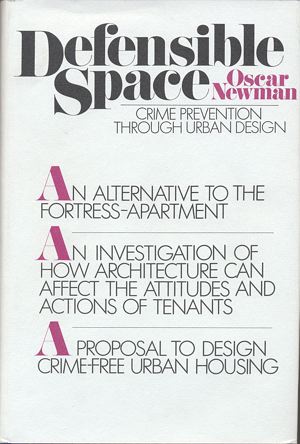


5) We don't really have a choice. Unless we want to have another housing crisis in the next twenty years, we need to dramatically change the way we design our environments and how we structure our lives, not to mention preventing urban crime and gangs and protecting out economic assets.

These are the kind of arguments that need to be made and debates that need to be had in order to fix the problem of urban sprawl. If we want to build a society that is economically, socially, and yes, environmentally sustainable, we need to look at the big picture and tackle it from all sides.

Thursday, June 23, 2011

New Urbanism, Bringing it in to Focus


This post will be one in a series of discussions on the New Urbanist movement that are the primary reason behind this blog's creation.   

While the idea of “New Urbanism” has caught on relatively easily among planners, it has drifted from its intended purposes and now encompasses ideas which were not intended to be parts of it. In short, we need to redefine it (or abandon the term altogether) in order for it to gain true success in the real world. This is an expansion of the point I made in my first post.  

The phrase “New Urbanism” can now mean anything from the redevelopment of an urban core to a suburb designed in the way of “traditional urban planning”. This needs to stop.


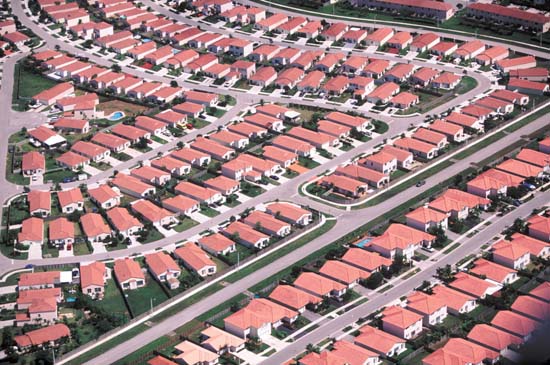
If we continue along the path of creating “New Suburbanism” as the latter is commonly called, we run the risk of creating distinct, urban nodes that are not substantially connected to each other to form the economic, political and social whole that is a city. Instead, extremely small neighborhoods and districts will be created, small enough to prohibit effective community organization or foster economic development, as well as becoming political nightmares to manage.  

It should be the goal of the New Urbanist movement to re-develop and re-purpose worn and decaying urban areas, not to build medium density suburbs. As these decaying or worn areas are re-built, suburban areas will either be vacated by people moving to redeveloped areas or integrated into the fabric of the city as it expands, at which point they can be rebuilt with precise ideas of how they will be used and at appropriate density.

We should fix what we have and retrofit inwards before we start building or retrofitting outwards.

In addition to this, when suburban areas are re-built, they need to be correctly integrated into a city's mass transit network. If one does not exist, one should be developed.

A good example of this is Celebration, Florida. It was designed to resemble a “traditionally styled” community, yet most of its residents live in single family units and the majority of commuting is done by car. It is often hailed as a success of New Urbanism, but it does not function as a true city. It has no effective districts, no transit system spurring redevelopment and expansion, and little diversity, economic or ethnic.


Celebration has a population of 11,000 people. This is too small to constitute an effective district (which requires over 100,000) should Celebration be surrounded by like-designed places and merged into an urban center.

Sunday, June 19, 2011

Ken Cuccinelli and the Dulles Metrorail Saga

The idea seems simple enough: connect the ninth busiest airport in the country with the nation's capital. The execution, well, makin' progress... 


After a decade of planning and with phase one of the project finally nearing completion, a new dispute has involved, this time involving the infamous Virginia Attorney General Ken Cuccinelli.  

Cuccinelli, apparently dissatisfied with the mere existence of the line, is now attempting to influence Loudon County voters to reject the second phase of the project (the one which would include the Dulles Airport station) by electing officials who would refuse to contribute funding towards it.  

Not only is Cuccinelli in the dark on this issue and willfully ignoring the economic development that the line would bring, but his actions regarding this project do not fall within his job description as Attorney General.  

And, like the Tysons' tunnel dispute, this is all over a relatively simple matter: Should the Dulles station be above ground, or underground?

The Washington Metropolitan Airports Authority (which is overseeing the project, not the Washington Metropolitan Area Transportation Authority, interestingly enough), wants to build an underground station, claiming that it will streamline connections from Metrorail to the terminal and decrease overall travel time.

Stakeholders including Virginia Governor Bob McDonnell want an above ground station, claiming that it will cut $330 million from the cost of the project, but increase travel time by three minutes.


The solution for this is simple: design the above ground and underground stations for the same plot of land. Build the above ground station directly on top of the main terminal parking lot (where the underground station is currently poised to go). This would solve any dispute and create the best of both worlds for travelers and taxpayers.

The link to the editorial which inspired this post.